
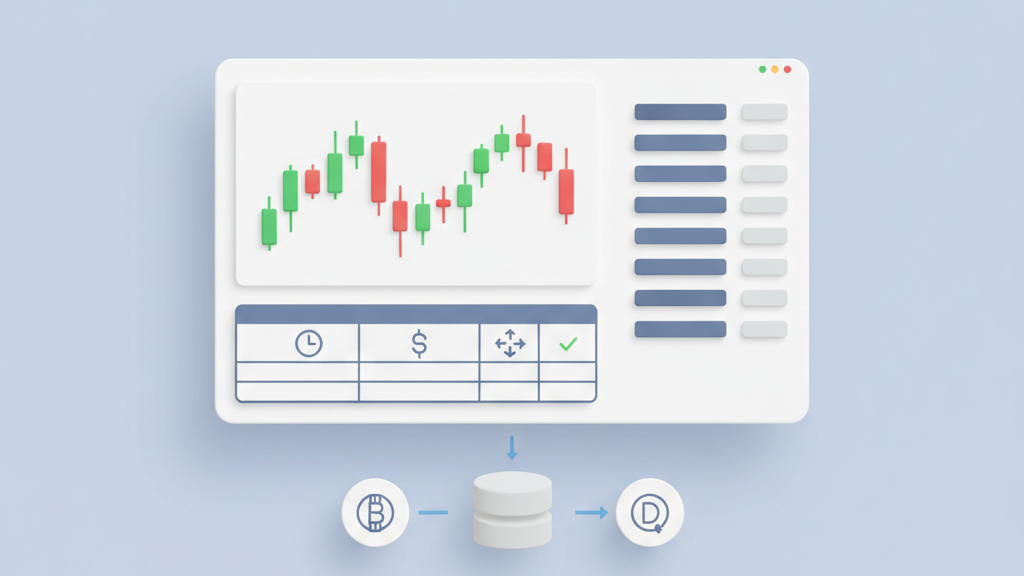
The Indian derivatives market is one of the most active financial arenas in the world. Trading Nifty and Bank Nifty requires extreme precision and a lack of emotional interference. At Indent Technologies, we specialize in building custom software for traders who want to scale their operations. This guide explains How We Create Trading Scripts for Futures & Options on Indian Stock Indexes using modern tools and data driven logic. We focus on helping startups and professional traders move from manual execution to fully automated systems that run on high performance cloud infrastructure. Many startups miss the technical nuances of the Indian exchange ecosystem, which is why a structured approach to script development is vital for long term success.
The Core Architecture for High Speed Trading
Building a trading script for the Indian market requires a deep understanding of local exchange dynamics. We start by selecting the right technology stack to ensure reliability. Python is our primary choice because it handles data processing and API communication efficiently. The Indian market moves fast during the opening bell and around the weekly expiry sessions. A good script must manage high volumes of websocket data without lagging. We focus on creating a modular architecture where the data handler remains separate from the execution logic. This design allows us to swap broker APIs like Zerodha or AngelOne without rewriting the whole strategy. Many startups miss the importance of local latency when running scripts on cloud servers. We often recommend using servers located close to the exchange regions to minimize execution delays. Our scripts process real time updates for Nifty 50 and Bank Nifty to ensure that entry orders hit the exchange at the exact price the strategy demands. This technical foundation is what makes a trading bot reliable over the long term. We avoid complex bloat and focus on a lean core that prioritizes speed and uptime above all else.
Why Automation Beats Manual Trading in F&O
Manual trading in the futures and options space is often a losing game for human participants. The emotional stress of watching a Bank Nifty position move against you can lead to poor exits and revenge trading. Our automated scripts remove this psychological burden entirely. By coding the rules into a system, the trade executes based on data rather than fear. We build systems that can scan hundreds of option strikes simultaneously. A human can only watch one or two charts at a time, but a script monitors the entire option chain for Nifty and Fin Nifty without getting tired. This allows for multi leg strategies like iron condors or straddles to be executed with perfect timing. Speed is the biggest factor in the Indian market where prices can jump several points in a single second. Our scripts reduce this latency to milliseconds, giving our clients a competitive edge in the order book. When you automate How We Create Trading Scripts for Futures & Options on Indian Stock Indexes, you gain the ability to manage risk with surgical precision.
- Execution speed far exceeds human capabilities.
- Emotional biases are eliminated from the decision process.
- Systems can monitor multiple indexes like Nifty and Bank Nifty.
- Complex multi leg strategies are handled with precision.
- Risk management rules are strictly enforced without exception.
- Backtesting allows for strategy validation before risking capital.
Strategy Development and Custom Alpha Generation
Creating a profitable strategy involves more than just picking a moving average. We work closely with founders to translate their unique market insights into code. The Indian market has specific quirks like high volatility during the last hour of expiry days. We build custom indicators that account for open interest shifts and volume spikes. These signals help identify when a trend is likely to reverse or accelerate. We prefer using a combination of technical indicators and price action logic. For example, a script might look for a breakout in Nifty 50 while also checking the weightage of top stocks like HDFC Bank or Reliance. This multi dimensional approach provides a higher probability of success. Many developers make the mistake of overcomplicating the logic. We believe that the best scripts are often the ones with clear and simple rules that can be tested across different market cycles. Robustness is better than perfection in the world of algorithmic trading. We also include logic for dynamic strike selection based on current market premiums and implied volatility levels. This ensures the script always chooses the most liquid and efficient contracts for the chosen strategy.
The Technical Stack for Indian Broker Integrations
The tools we use define the performance of the trading script. We rely heavily on the Python ecosystem for its rich set of financial libraries. Data manipulation is handled by Pandas and NumPy, which allow us to process years of historical data in seconds. For technical analysis, we integrate libraries like TA-Lib to calculate standard indicators. However, the real value lies in the custom wrappers we build for broker APIs. Each broker in India has a slightly different way of handling orders and websocket feeds. We create a unified interface so the strategy logic remains clean. We also use advanced scheduling tools to ensure scripts start before the market opens and shut down safely after the closing bell. This automation includes daily login processes that handle multi factor authentication for brokers like Zerodha Kite or Dhan. Reliability is built into every layer of our stack.
- Pandas and NumPy for high speed data processing.
- TA-Lib for reliable technical indicator calculations.
- Custom API wrappers for Zerodha and AngelOne.
- WebSocket handlers for real time price updates.
- Logging systems to track every order and error.
- Automated schedulers for market hours management.
Backtesting and the Reality of Slippage
Backtesting is the most critical phase before any capital is put at risk. We use historical data to see how a strategy would have performed over the last five years. This process reveals the maximum drawdown and the win rate of the script. However, we often warn our clients that backtesting results can be misleading. Many developers ignore slippage and transaction costs in their simulations. In the Indian options market, the gap between the bid and ask price can be significant. Our backtesting engine accounts for these costs to provide a realistic view of profitability. We also perform walk forward analysis to ensure the strategy is not overfitted to past data. If a script only works on one specific year of Nifty data, it will likely fail in the future. We aim for strategies that show resilience across trending and sideways markets. After successful backtesting, we move to paper trading. This allows us to see how the script handles live market data and exchange latency without losing real money. It is a necessary bridge between a concept and a live production environment.
Rigorous Risk Management for Capital Protection
Risk management is the only way to survive in the volatile world of Indian stock indexes. Even the best strategy will have losing days. We build multiple layers of protection into every script we create for our clients. The first layer is the hard stop loss on every position which is sent to the exchange immediately after an entry. The second layer is a daily loss limit for the entire account. If the account loses a certain percentage, the script automatically kills all positions and stops trading for the day. This prevents a single bad day from wiping out a trading account. We also implement position sizing logic based on the current volatility of the market. During high VIX periods, the script reduces the number of lots to keep the risk constant. Many traders overlook the importance of time based exits. We often include rules to exit all positions before three fifteen PM to avoid the unpredictable volatility of the market close. This comprehensive approach is part of How We Create Trading Scripts for Futures & Options on Indian Stock Indexes at Indent Technologies.
- Automated stop loss orders for every trade.
- Daily account level loss limits to protect capital.
- Dynamic position sizing based on market volatility.
- Time based exit rules to avoid market close spikes.
- Error handling for internet or API connection failures.
- Margin checks before placing any new orders.